McCormick, SCLawn Care Services
Lawn fertilization and weed control for McCormick, from downtown to the lake.
Lawn Care, Fertilization and Weed Control in McCormick, SC
McCormick is the county seat of McCormick County, formed in 1916. The town grew up around the Dorn gold mines and is named for Cyrus McCormick, the reaper inventor who bought the mines in 1871. The county lies in the lower Piedmont and borders the Savannah River and J. Strom Thurmond Lake, also known as Clarks Hill Lake, which formed behind the dam the U.S. Army Corps of Engineers built in the 1940s. Savannah Lakes Village sits on the lake shore, and pine plantings from the 1930s became the core of the Long Cane division of Sumter National Forest.
Lawns here deal with what comes with that setting: rolling ground with slopes facing every direction, shade from tall pines, and Piedmont clay. By the 1930s the county had serious soil erosion, and across much of the Piedmont it is common to find red clay close to the surface. Augusta Grass Masters has provided lawn care in the Central Savannah River Area since 2009, and McCormick lawns get the same eight-round fertilization and weed control program we recommend to every customer.
Lawn Care for Shade, Slopes and Clay
In McCormick, shade and slope often decide which grass does well. Clemson Extension notes that in the Piedmont, centipedegrass does best in open, sunny areas on south- or southwest-facing slopes and often suffers winter kill on north-facing slopes or in shade. Tall fescue does well in light shade and on north- or northeast-facing slopes in the Piedmont, and Clemson says it does best in heavier clay. Bermudagrass has very poor shade tolerance, while zoysiagrass handles shade well. We treat lawn diseases, lawn insects, and shrub and tree diseases and insects, and we offer aeration, shrub and tree fertilization, and mosquito control.
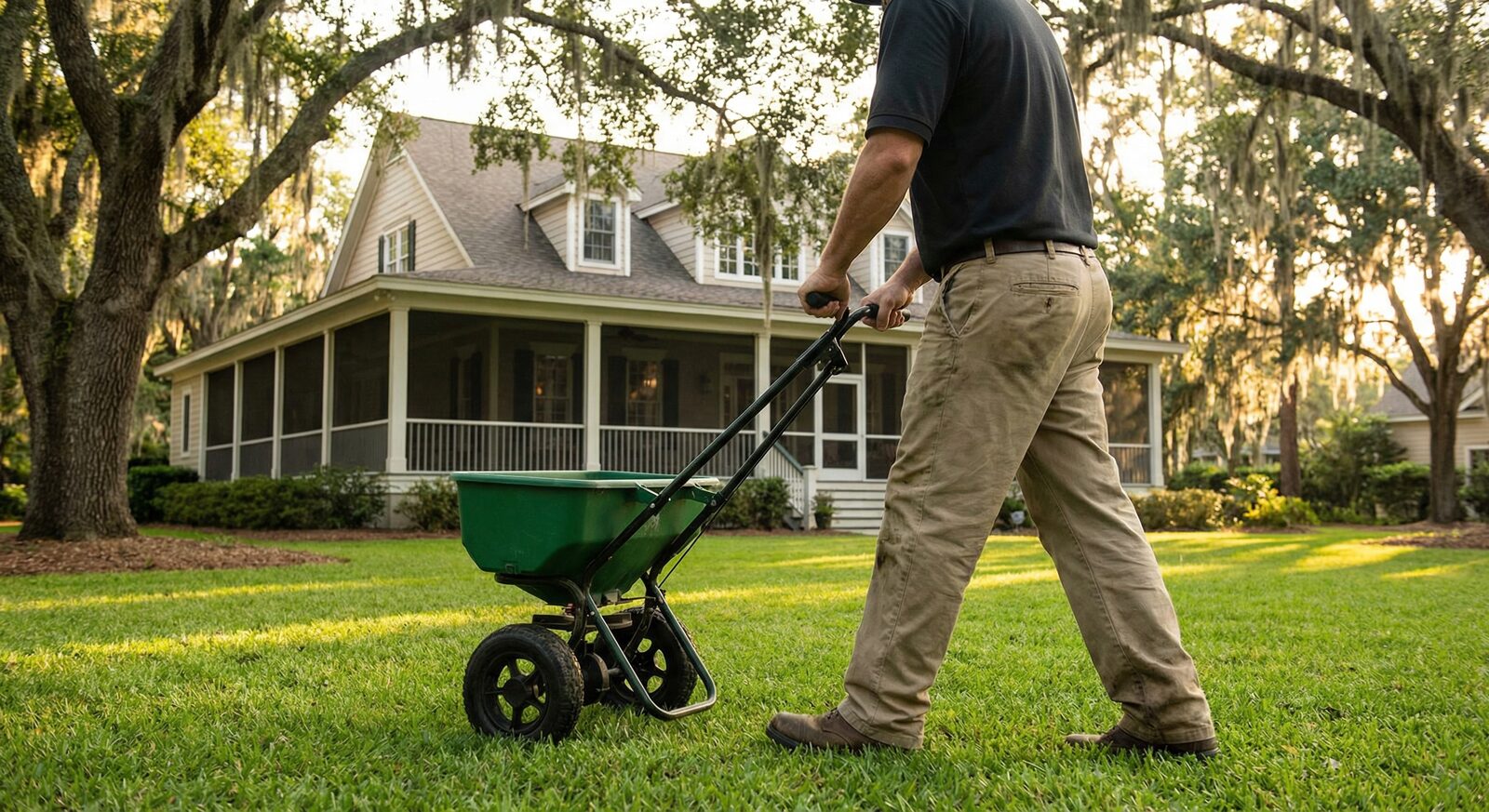
Pricing is based on the size of the lawn, measured from a satellite image of the property. Shaded, damp spots under trees and along wooded edges are where fungus problems like brown patch and dollar spot tend to start.
Where sun and shade meet, one yard can hold more than one grass: centipede or bermuda out in the open, tall fescue or zoysia under the trees. Each needs different feeding, and some weed control products that are safe on one grass can damage another, so the grass type has to be known before anything goes down.
Fertilization on Piedmont Clay
Clay holds on to nutrients, but compacted clay keeps roots shallow. Our fertilization program puts down fertilizer and weed control across eight visits a year and is adjusted as the year goes on. Heavy rain can mean an extra pre-emergent application, and granular fertilizer is sometimes melted into a liquid so other products can go down with it. The program rarely ends the year the same way it started.
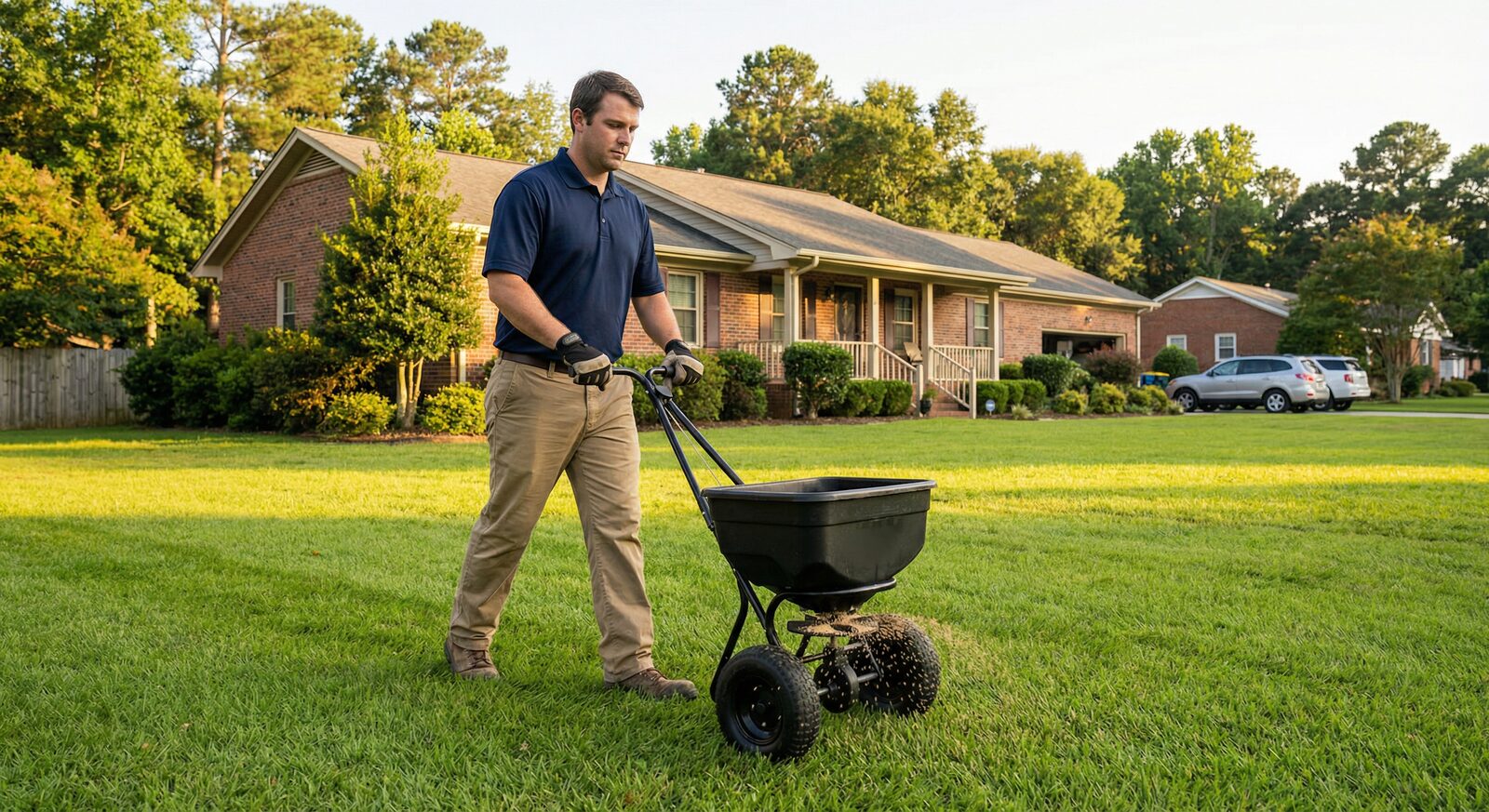
Shaded lawns grow slower and use less, and pushing them with extra nitrogen tends to invite disease, so feeding is matched to the grass and the site. We also provide fertilization for trees and shrubs, which on thin clay soil often need help of their own.
The clay soils common across this part of the Piedmont tend to be acidic, and grasses differ in how much acidity they handle. Clemson notes that centipede is adapted to acidic soil, while other grasses may need lime to do their best. A soil test through Clemson Extension is the reliable way to find out what a yard needs before any lime goes down.
Weed Control in McCormick
Our weed control services combine pre-emergent applications, which stop weed seeds before they sprout, with post-emergent treatments for weeds already growing, including broadleaf weeds like clover and grassy weeds. Spring treatments target summer weeds. Fall treatments target the cool-season weeds that grow over winter while warm-season grass is dormant.
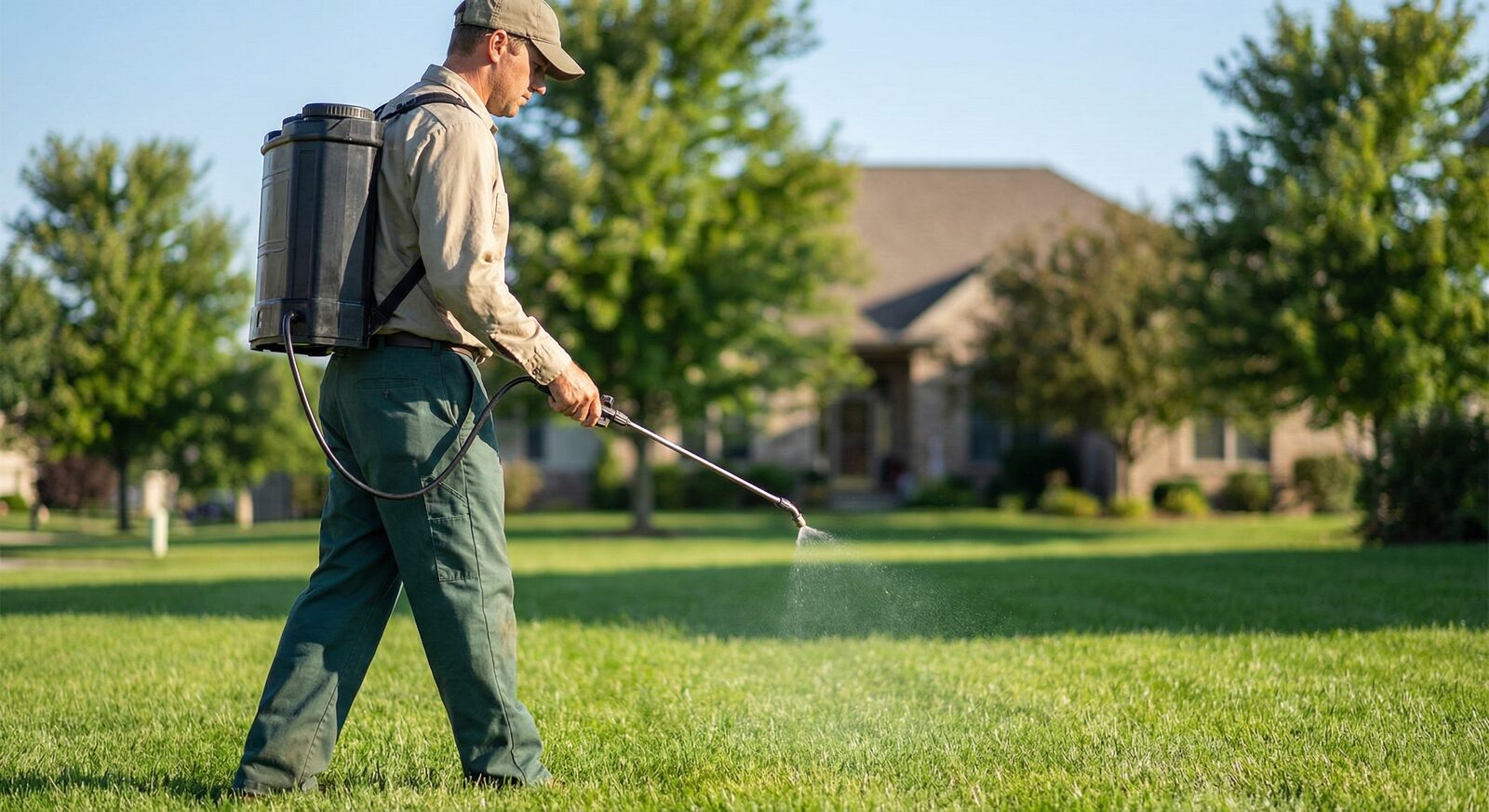
Thin turf on slopes and under trees is where weeds get in first. Keeping the grass fed with fertilization and the soil open with aeration services helps it hold those spots. Expect about a full year of treatments before a lawn is built up.
On slopes, erosion and weeds feed each other. Bare clay washes away in hard rain, and weeds are usually the first plants to take hold in the gaps. A lawn that stays thick through the summer holds the soil better and leaves less open ground for weeds to fill.
Aeration for Compacted Clay
Aeration removes small cores of soil so water and air can get into the root zone. On McCormick’s sloped clay lawns it also helps rain soak in where it would otherwise run off a hard surface.
Timing depends on the grass. Warm-season lawns like bermuda, zoysia, and centipede are aerated from late spring into early summer, when they grow fast enough to recover. Cool-season tall fescue is aerated in early fall or early spring. Pairing core aeration with a fertilization round gets more out of both.
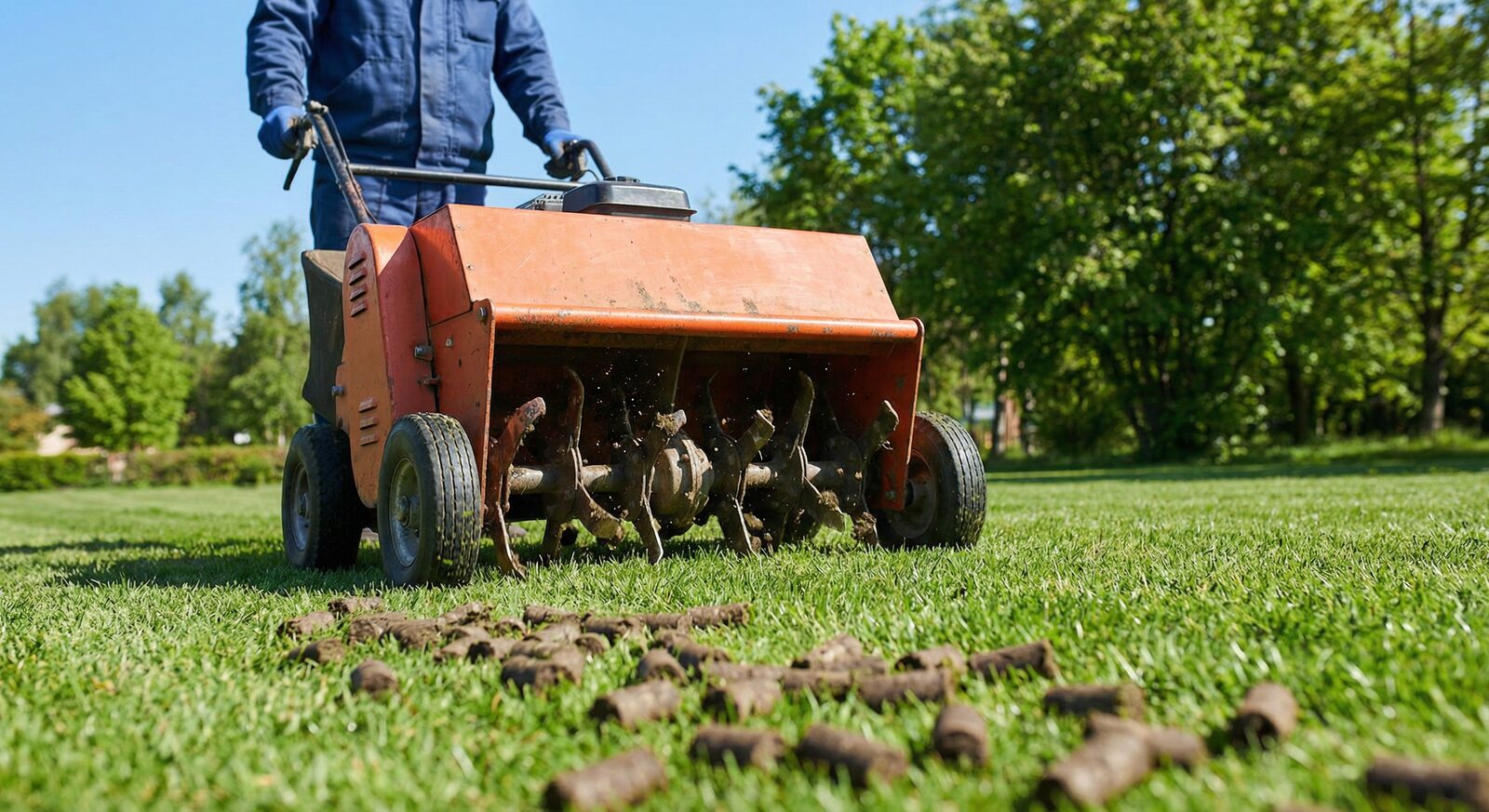
If your lawn stays soggy after rain, has bare patches where water sheets off, or feels hard underfoot in summer, ask about aeration services on your next visit.
Complete the form below and someone from our team will reach out: