
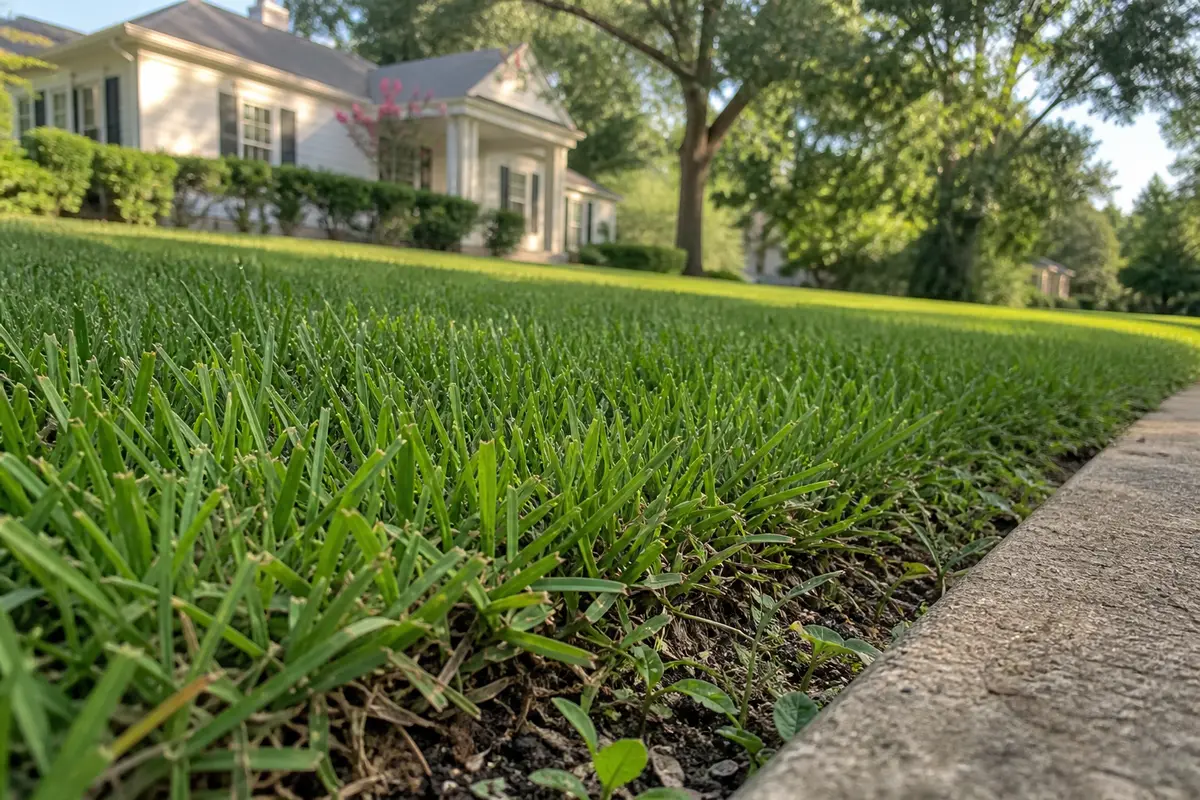
Fall Pre-Emergent in Augusta, GA: Timing Guide
Late August still feels like summer in Augusta, but winter lawn weeds are already becoming the next concern. For homeowners looking for guidance on fall pre-emergent treatments in Augusta, GA, a well-timed treatment can help prevent many annual weeds before they show up across the lawn. The key is not a date circled on the calendar. It is matching the treatment to the lawn, the weather, and the conditions that trigger germination.
What Fall Pre-Emergent Actually Does
Pre-emergent weed control is preventive. It creates a treatment zone in the upper soil where susceptible weed seeds begin developing. When applied and activated before germination, it interrupts that early growth process.
That distinction matters: pre-emergent does not kill weeds that are already visible. Existing weeds may require a different approach, and the right response depends on the weed species, turf type, growth stage, and lawn condition. Professional diagnosis helps separate a new winter annual from a persistent perennial or a warm-season weed that is still hanging on.
Fall prevention commonly targets annual winter weeds that germinate as conditions cool, grow through winter, and become much more noticeable by early spring. Annual bluegrass, chickweed, henbit, and purple deadnettle are familiar examples in the region. A preventive application will not stop every weed species, and it is not a substitute for a complete weed control program. It is one important layer in that program.
Why Late Summer Is the Planning Window in Augusta
University guidance supports fall pre-emergent use before cool-season annual weeds germinate. UGA Extension notes that timing depends on factors such as grass species and soil temperature, while Clemson Extension uses sustained cooling conditions as a practical signal for fall applications in warm-season lawns.[1][2]
For Augusta and nearby CSRA communities, that makes late summer the time to inspect the lawn, review recent weather, and prepare the treatment plan. It does not mean every property should be treated on August 28 or on any other universal date. A hot, dry stretch can produce different conditions than a rainy late summer. Soil in a shaded lawn may cool differently from soil in a full-sun yard. Conditions can also vary between Augusta, Evans, Grovetown, North Augusta, and Aiken.
The goal is to have the preventive barrier in place and properly activated before the target weeds germinate. Applying too late can leave the first flush unprotected. Applying simply because the calendar says “fall” can ignore what is actually happening in the soil.
Five Factors That Shape the Right Timing
1. Soil temperature
Weed seeds respond to conditions in the soil, not the date printed on a calendar. A professional treatment plan watches the trend rather than relying on one isolated reading. Sustained cooling is more useful than a brief cool morning followed by another run of hot weather.
2. Turf type
Bermudagrass, zoysiagrass, centipedegrass, and St. Augustinegrass do not all respond the same way to every treatment. The turf must be correctly identified so the selected approach is appropriate for that grass and its current condition. Newly established or recently disturbed turf may also require special consideration.
3. Weather and lawn stress
Heat, drought stress, heavy rain, and sudden temperature changes can affect both timing and treatment decisions. A lawn struggling from late-summer stress should be evaluated as a whole. Weed prevention should fit the turf’s condition, not work against it.
4. Irrigation and rainfall
Many pre-emergent treatments need moisture to move into the upper soil and become effective. The exact activation requirements depend on the treatment plan and label. Too little water may keep the barrier from setting properly, while a poorly timed heavy downpour can complicate an application. Irrigation availability and the forecast both matter.
5. The full treatment plan
Fall weed prevention should be coordinated with seeding, establishment work, disease concerns, insect pressure, and fertilization. Because pre-emergent is designed to interfere with germination and early development, planned seeding or overseeding may change whether it is appropriate. Tell your lawn-treatment professional about any upcoming turf work before service.
What Pre-Emergent Cannot Fix
Homeowners sometimes call after green weeds are already scattered through the lawn and ask whether a fall preventive will remove them. It will not. Once a weed has emerged, it must be identified and evaluated for post-emergent control or another suitable response.
A thin area also needs more than a weed treatment. Compaction, poor drainage, shade, disease, insect damage, incorrect irrigation, or an unsuitable nutrient program can open space for weeds. Treating the underlying lawn-health issue helps reduce the conditions that allow repeated infestations. Augusta Grass Masters focuses on treatment-based lawn health services, including fertilization, weed control, lawn disease, lawn insects, mosquito control, and shrub and tree care.
A Smarter Fall Weed-Control Checklist
Before a fall pre-emergent treatment, a lawn professional should be able to answer:
- What turfgrass is present, and is it established and healthy enough for the planned treatment?
- Which winter annual weeds are most likely based on the property’s history?
- Have target weeds already emerged?
- What are soil and weather trends showing?
- How will rainfall or irrigation activate the treatment?
- Is any seeding, repair, or other turf work planned?
Those questions are why a customized program is more dependable than applying the same treatment to every lawn on the same day.
Frequently Asked Questions
1. When should fall pre-emergent be applied in Augusta, GA?
The correct window is before target winter weeds germinate, but there is no single date that fits every Augusta lawn. Soil temperature trends, turf type, weather, moisture, irrigation, and the overall treatment plan all influence timing. Late summer is the time to evaluate conditions and prepare.
2. Will fall pre-emergent kill weeds already growing in my lawn?
No. Pre-emergent is intended to prevent susceptible seeds from successfully germinating and establishing. Visible weeds need to be identified and may require a properly selected post-emergent treatment.
3. Does pre-emergent prevent every winter weed?
No treatment prevents every species. Results depend on the target weed, application timing, coverage, activation, site conditions, and the treatment plan. Perennial weeds and weeds that emerged before application require different management.
4. Does fall pre-emergent need to be watered in?
Many treatments require rainfall or irrigation for activation, but the amount and timing are specific to the treatment and its label. A professional should account for the forecast and the property’s irrigation before application rather than relying on a one-size-fits-all instruction.
5. Can I seed after a fall pre-emergent treatment?
Pre-emergent can also interfere with desired grass seed. Seeding or overseeding plans must be discussed before treatment so the weed-control and establishment schedules do not conflict. The appropriate interval depends on the selected treatment and label directions.
Plan Winter Weed Prevention Before Weeds Appear
The best time to discuss winter weeds is before they become a spring lawn full of seed heads and broadleaf growth. Augusta Grass Masters has served the CSRA since 2009 as a fertilization and weed control company, providing professional diagnosis and treatment plans for lawns across Augusta, Evans, Grovetown, North Augusta, Aiken, and nearby communities.
If you want a plan built around your turf type and current conditions, contact Augusta Grass Masters for a lawn evaluation. We will assess the lawn, identify concerns, and determine how fall pre-emergent fits into a complete treatment program.


