Red Flags When Hiring a Lawn Care Company in Georgia
The biggest red flags are a company that quotes a price without seeing your lawn, pushes the same program on every yard, won’t put the services and timing in writing, or is hard to reach once you’ve paid. Any one of those is worth a second look before you sign.
What are the biggest red flags when hiring a lawn care company?
Most problems with lawn companies show up before the first treatment, if you know what to look for. These are the ones we’d take seriously:
- A firm price given over the phone or by text without anyone looking at the lawn.
- A program that is identical for every customer, regardless of grass type, shade, soil or history.
- A quote that says “lawn treatment” but doesn’t list what is applied, how many visits, or when.
- Pressure to sign a long contract today, or a discount that only lasts until you hang up.
- Vague answers when you ask what licenses the company holds.
- No real person to call. You get a call center, a chat box, or a voicemail nobody returns.
- Promises of a perfect, weed-free lawn by a certain date. Weed control is a process, and results depend on the lawn’s starting condition and the weather.
Why is a one-size-fits-all program a warning sign for Georgia lawns?
Georgia lawns are not all the same grass. Around Augusta and the CSRA you’ll find bermuda, zoysia, centipede and St. Augustine, and each one wants something different. Centipede, for example, is easily pushed too hard with heavy nitrogen, while bermuda in full sun can use a lot more. A fixed schedule that ignores that can leave one lawn starved and another burned or overgrown.
Shade, irrigation, soil and past problems matter too. A lawn that is mowed weekly and a lawn that is mowed every other week don’t need the same plan. A yard with a nutsedge problem in a low spot needs different attention than a yard with only a few winter weeds along the driveway. If a company’s answer to every lawn is the same four-step calendar, it may not be adjusting products, rates or timing to your turf.
Should a company walk your property before it treats anything?
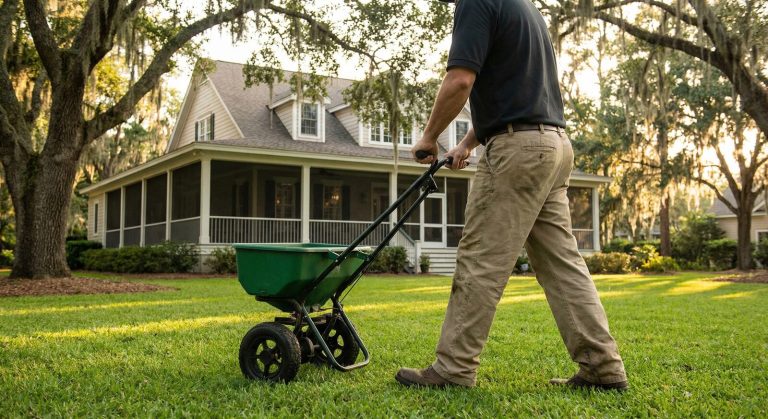
Yes. This is the simplest test, and it’s one many companies skip. At Augusta Grass Masters, every property gets walked before anything comes off the truck. Walking it means looking at what is actually growing, what grass is there, where the thin areas are, and what’s likely to be causing them.
Here is what a walk should cover on a typical warm-season lawn:
- Grass type. It determines product choice and timing.
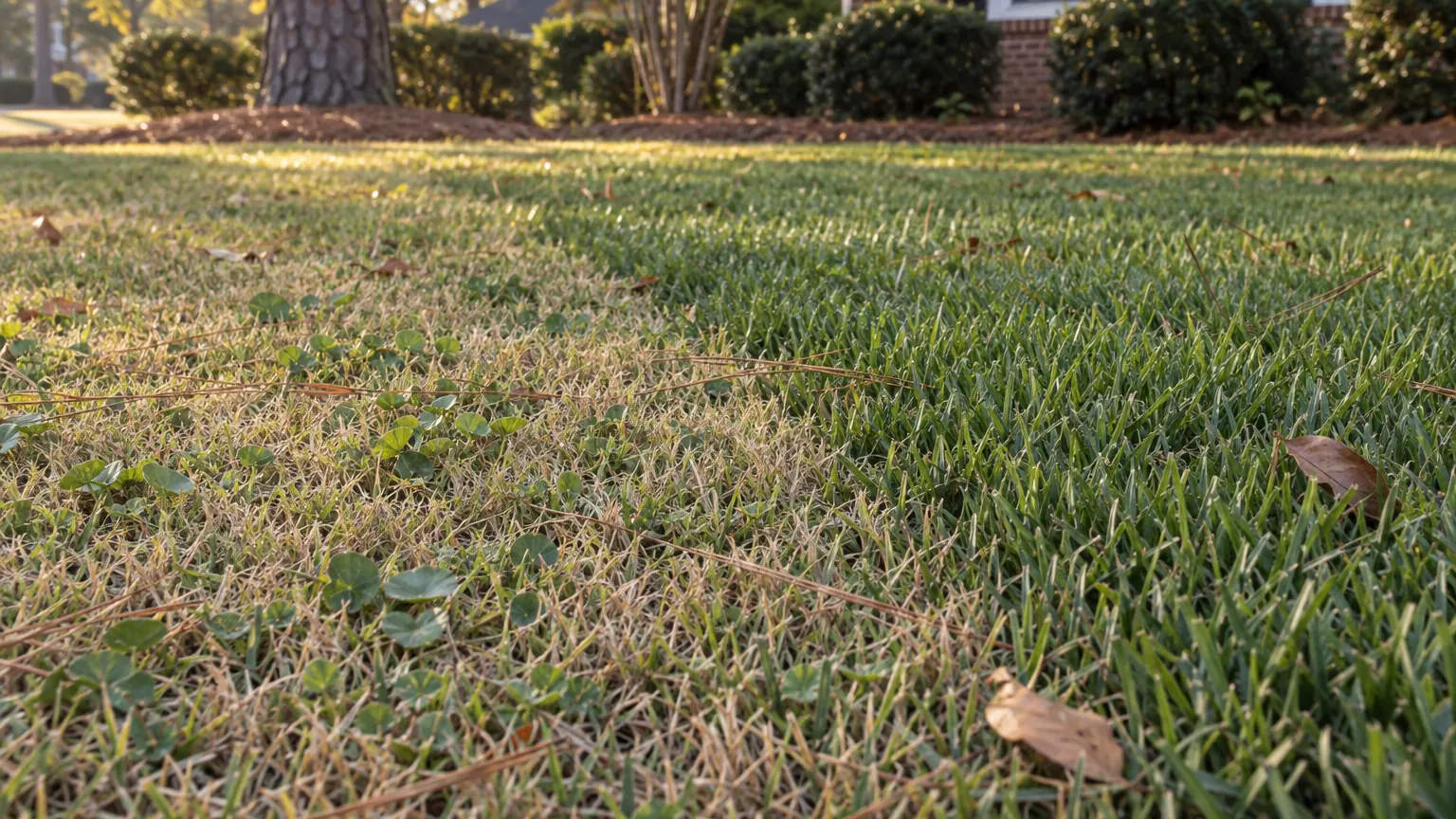
- Weed pressure. Which weeds are present, and whether they are broadleaf weeds, grassy weeds or sedges, since each needs a different approach.
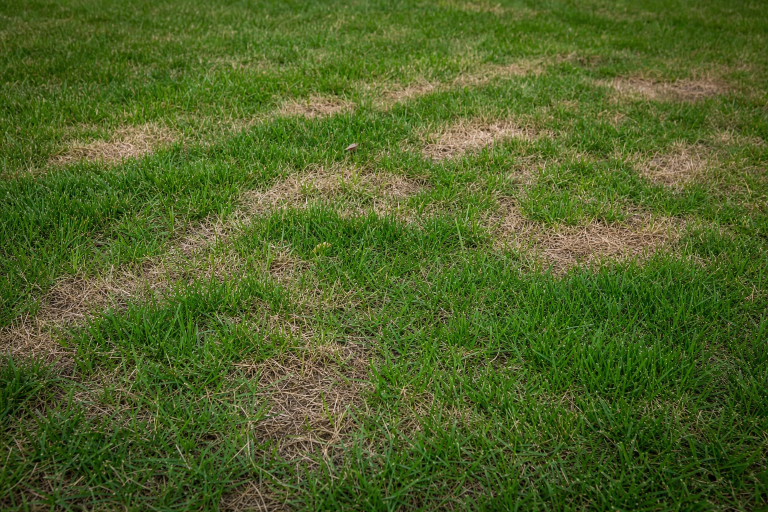
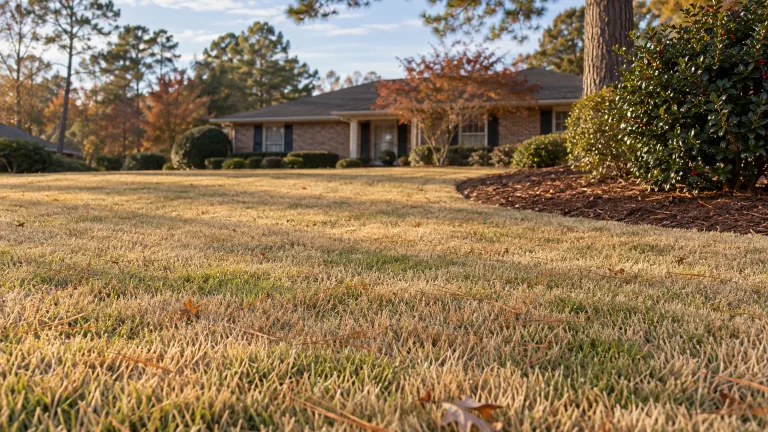
- Problem areas. Thin turf, discolored patches, compacted ground, or signs of insects or disease that fertilizer alone won’t fix.
- How the lawn is maintained. Mowing height and frequency, and whether it’s irrigated.
If a company can’t tell you what they saw on your lawn, they probably didn’t look.
What should a fertilization and weed control quote spell out?
A good quote is boring and specific. Ask for these things in writing:
- What is included: fertilization, pre-emergent, post-emergent weed control, and anything else such as insect or disease treatment.
- How many visits, and roughly when they happen through the year.
- What is not included, and what an extra treatment would cost if a problem like insects or disease shows up.
- How payment works, and when you’re billed.
- How to cancel, and whether there’s any fee or notice period.
Be wary of anything that says “full service” and leaves it at that. The phrase means different things at different companies. To some it means mowing and edging. To others it means only fertilizer and weed spraying. Get the list of actual services so you can compare two quotes side by side.
Also be careful comparing on price alone. We are not the cheapest and we don’t intend to be. Our work is for people who want it done right: the right product, at the right time, at a fair price. A very low quote can mean fewer visits, less product, or extra charges later. Compare the total cost and what is included, and ask what you’re getting for the number.
How can you check a company’s credentials and who answers the phone?
Licensing
Applying herbicides and other pesticides for hire is regulated work, so it’s fair to ask any company what licenses it holds and to confirm the answer with the state. In Georgia that is the Georgia Department of Agriculture, and in South Carolina it is Clemson University’s Department of Pesticide Regulation. Ask for the license details and check them with the agency directly. A company that is comfortable with the question will answer it plainly. Because the Augusta area runs across the Georgia and South Carolina line, check with the agency in the state where you live.
Who you’ll actually talk to
This one matters more than people expect. Lawn care runs for months, and questions come up: a weed that came back, a brown patch after a storm, a missed visit. Ask who picks up when you call. With us, it’s one of the two of us, Zac or his wife. There is no call center and no answering service, and if we miss you, we’re the ones listening to the message and calling you back. Every customer has Zac’s cell number. You don’t have to pick a company that works the same way, but you should know before you sign who you’ll reach when something goes wrong.
How focused the company is
Zac started this business in 2009 as a mowing company, added fertilization and weed control about a year later, and went through a program at the University of Georgia. Around five years in, he sold off the entire maintenance and landscape installation side of the business and kept only fertilization and weed control. That kind of focus is worth asking about when you interview anyone. Is lawn treatment the main thing they do, or one more line item on a long list?
What does a good lawn care program look like for a warm-season Georgia lawn?
For a warm-season lawn, the year roughly follows the grass. A solid program usually includes:
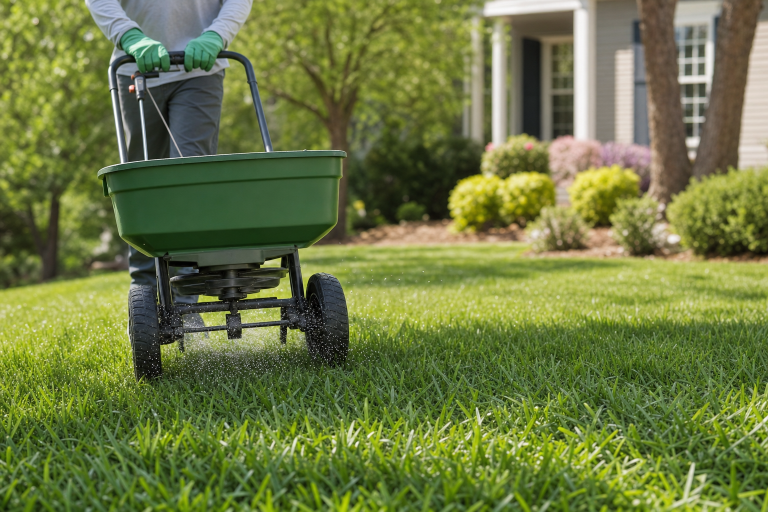
- Late winter to early spring pre-emergent to stop crabgrass and other summer weeds before they germinate, timed to soil temperature rather than the calendar.
- Fertilization after green-up, when the grass is actively growing and can use it, not while it’s still dormant.
- Spot weed control through the growing season for weeds that break through.
- Fall pre-emergent for winter weeds like annual bluegrass.
- Attention to problems such as insects or disease when they show up, rather than treating on autopilot.
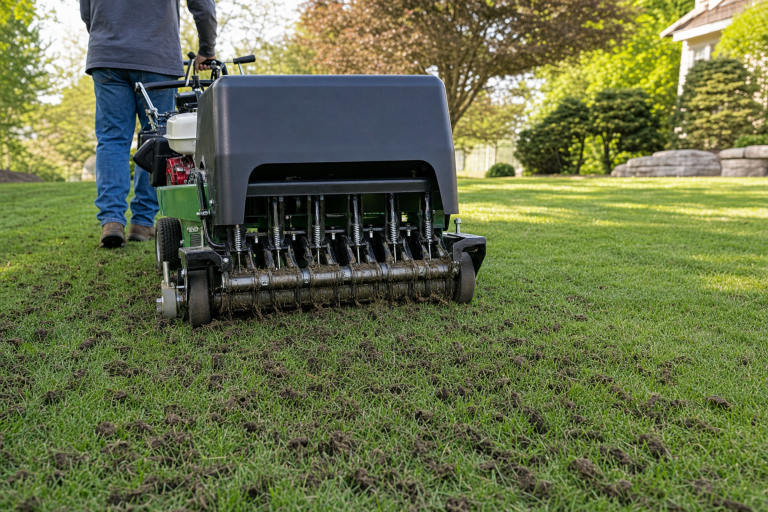
Aeration can also be worth considering on compacted soil, though soils vary across the region, and whether it makes sense for your lawn depends on what you see when you walk the yard. You can read about how we handle lawn care and treatment in the Augusta area if you want to compare what a program looks like.
What to do next
Get at least two quotes, ask each company to walk the lawn, and compare what’s written down instead of the headline number. If you’d like us to take a look at your yard and talk it through, you’re welcome to reach out through our contact page. The questions above are good ones to ask us too.
Frequently asked questions
How do I check a lawn care company’s licensing in Georgia?
Ask the company what licenses it holds for applying herbicides and other pesticides, then confirm the answer with the Georgia Department of Agriculture (for a South Carolina property, Clemson University’s Department of Pesticide Regulation). Requirements can vary by type of application, so the state agency is the best source. A reputable company should answer this question plainly.
Is a cheap lawn care quote a red flag?
Not automatically, but it deserves questions. Ask how many visits are included, what products are used, and what extra charges could come later. Extra charges or thin coverage can erase an apparent saving, so compare the total cost and what is included.
Should I sign a long-term contract with a lawn care company?
Be cautious about any contract you feel pressured to sign right away. Read the cancellation terms, the list of services, and the billing schedule first. A company confident in its work shouldn’t need to lock you in on the spot.
What should I ask a lawn care company before the first visit?
Ask whether they will walk your property first, what grass type they see, and what exactly each visit includes. Also ask what licenses they hold and who you will reach if you have a question. Get the answers in writing if you can.
What is considered full service lawn care?
There is no single definition. Some companies mean mowing and edging, others mean fertilization, weed control, and insect or disease treatment. Ask for a written list of services so you know what you’re actually paying for and can compare quotes fairly.